GRAPHIC RECORDING MAKES YOUR EVENT MORE
loop
Also known as:
Graphic facilitation, Visual facilitation, Live illustration, Scribing…
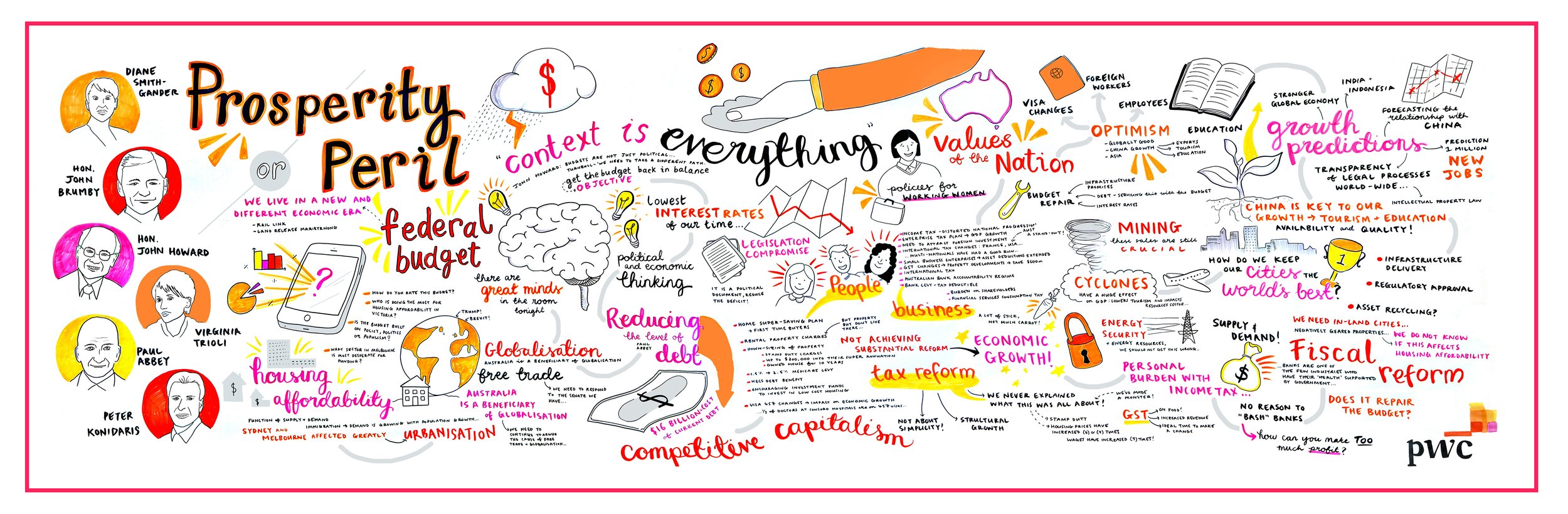
Graphic recording is the art of deep listening and real-time synthesis. As conversations unfold in the room, I'm capturing the essence of what's being said — the key takeaways, action items, themes, quotes and important details — distilling complex ideas into clear, visual language that everyone can follow and understand
The magic happens in three ways:
In the moment: your audience watches ideas come to life on the canvas, which creates immediate engagement and clarity.
Throughout the event: the work becomes a shared reference point - everyone's literally on the same page.
After the event: you leave with a tangible, beautiful record of what was discussed and decided - something meaningful to share, reference, and build on.
It's not just a nice visual record. It's a strategic communication tool that helps people remember more, understand better, and feel genuinely heard.
TAKE YOUR PICK…
-
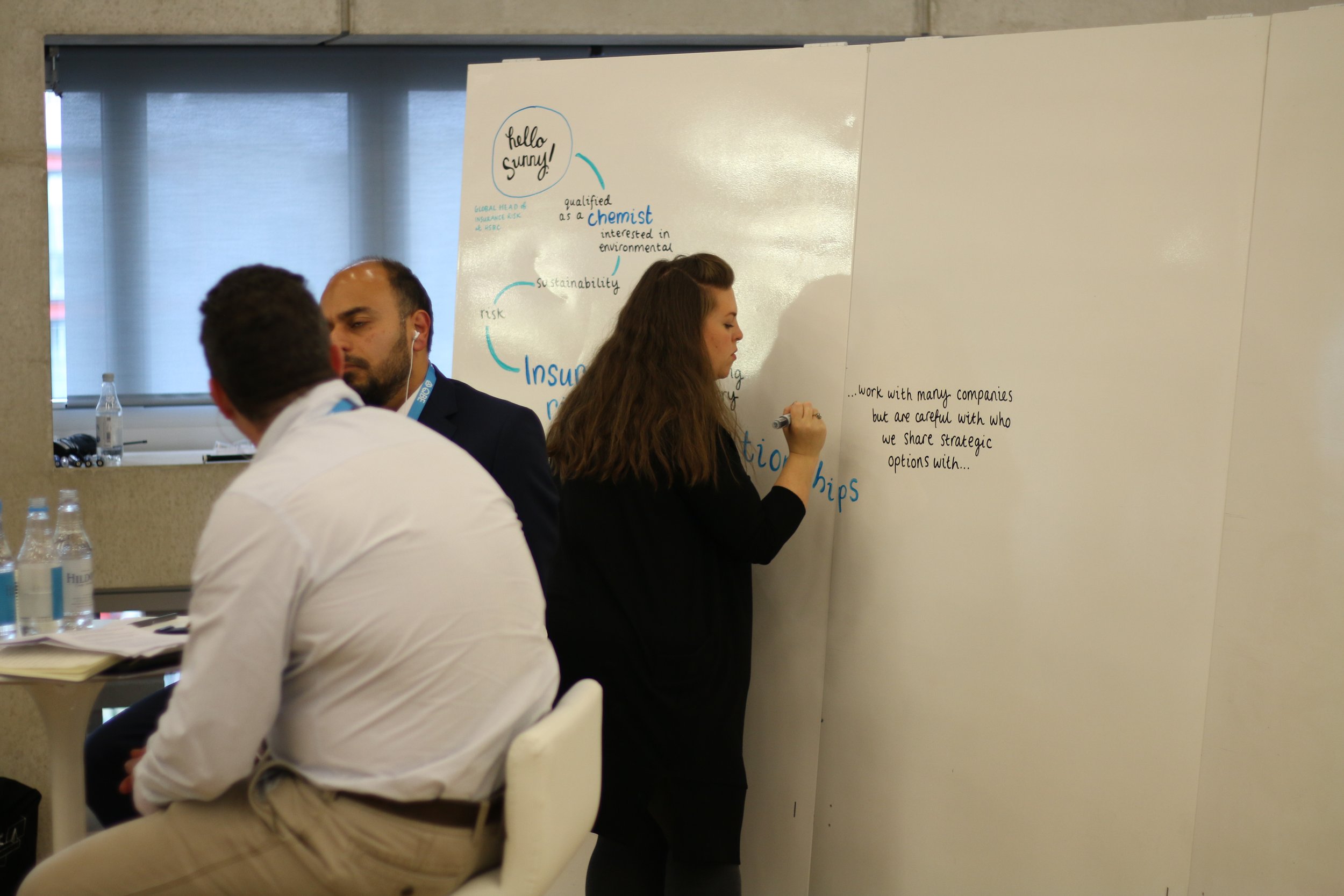
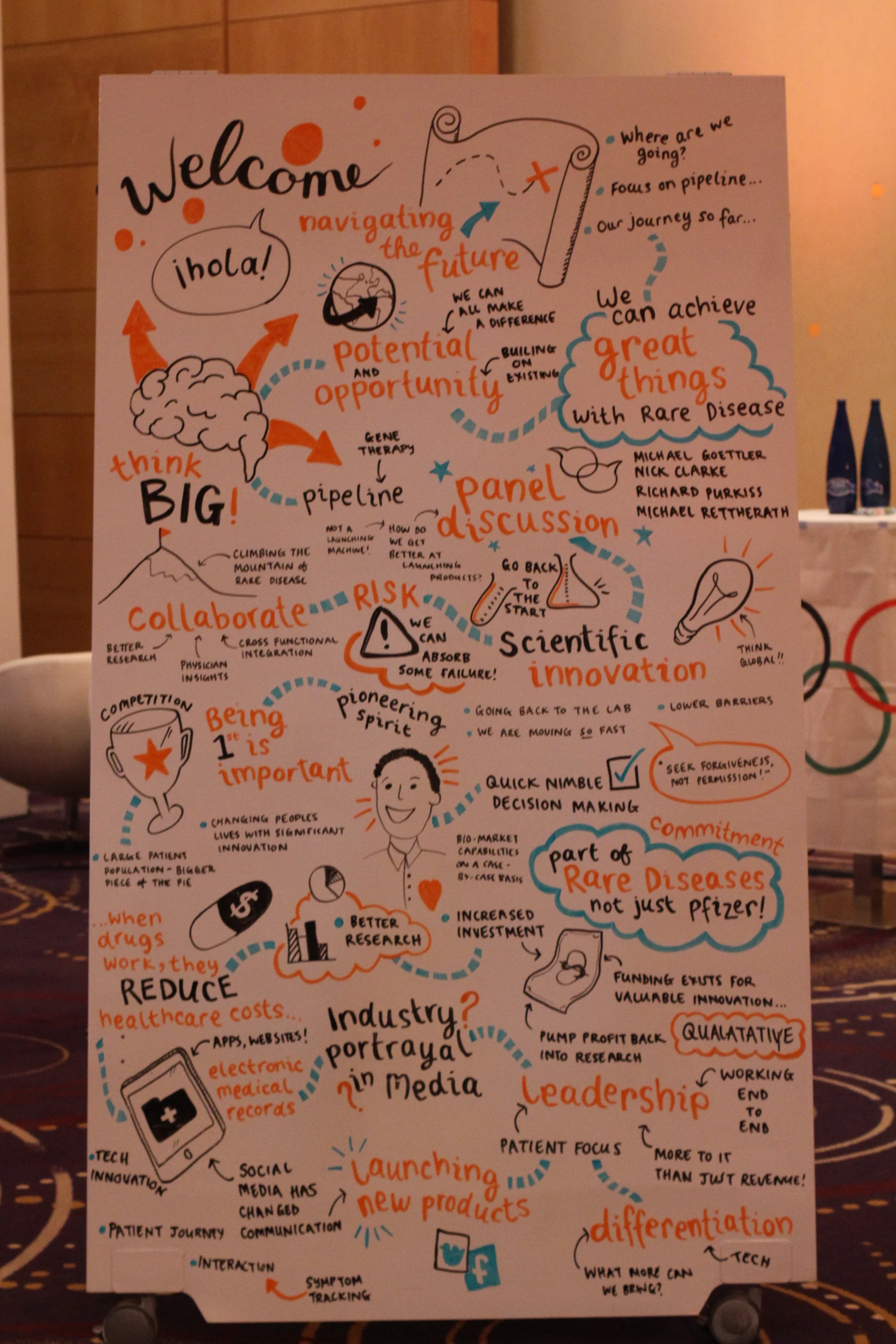
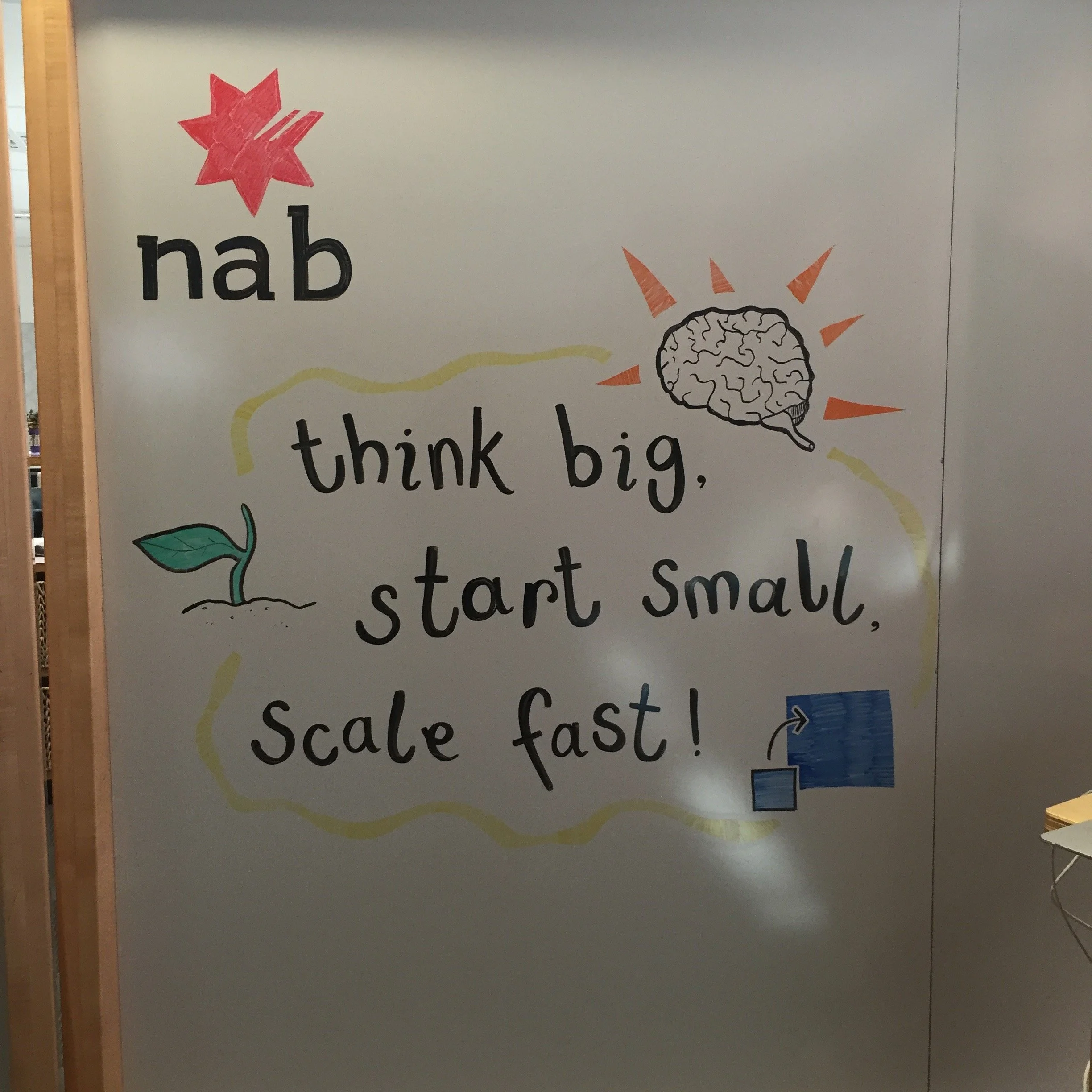
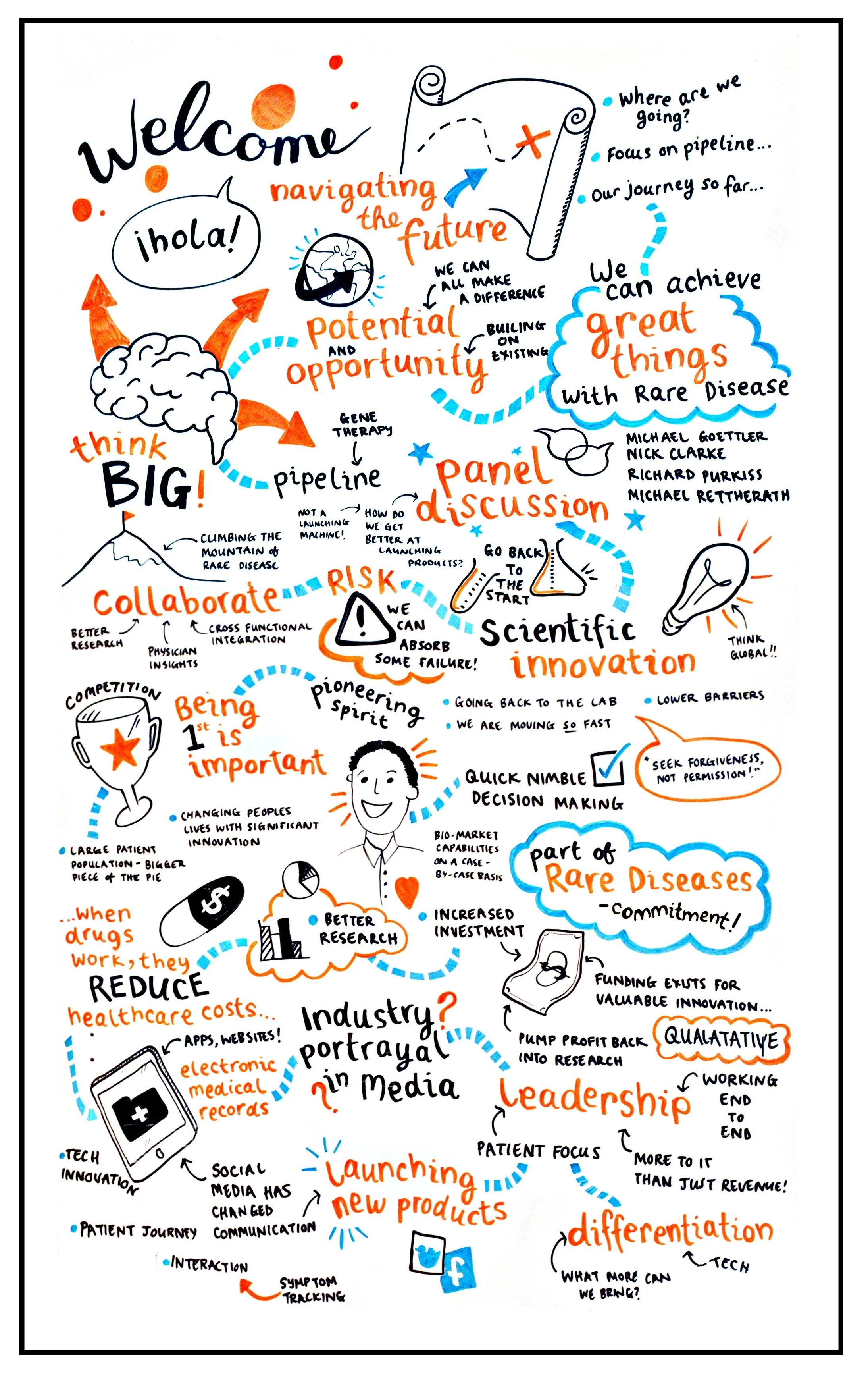
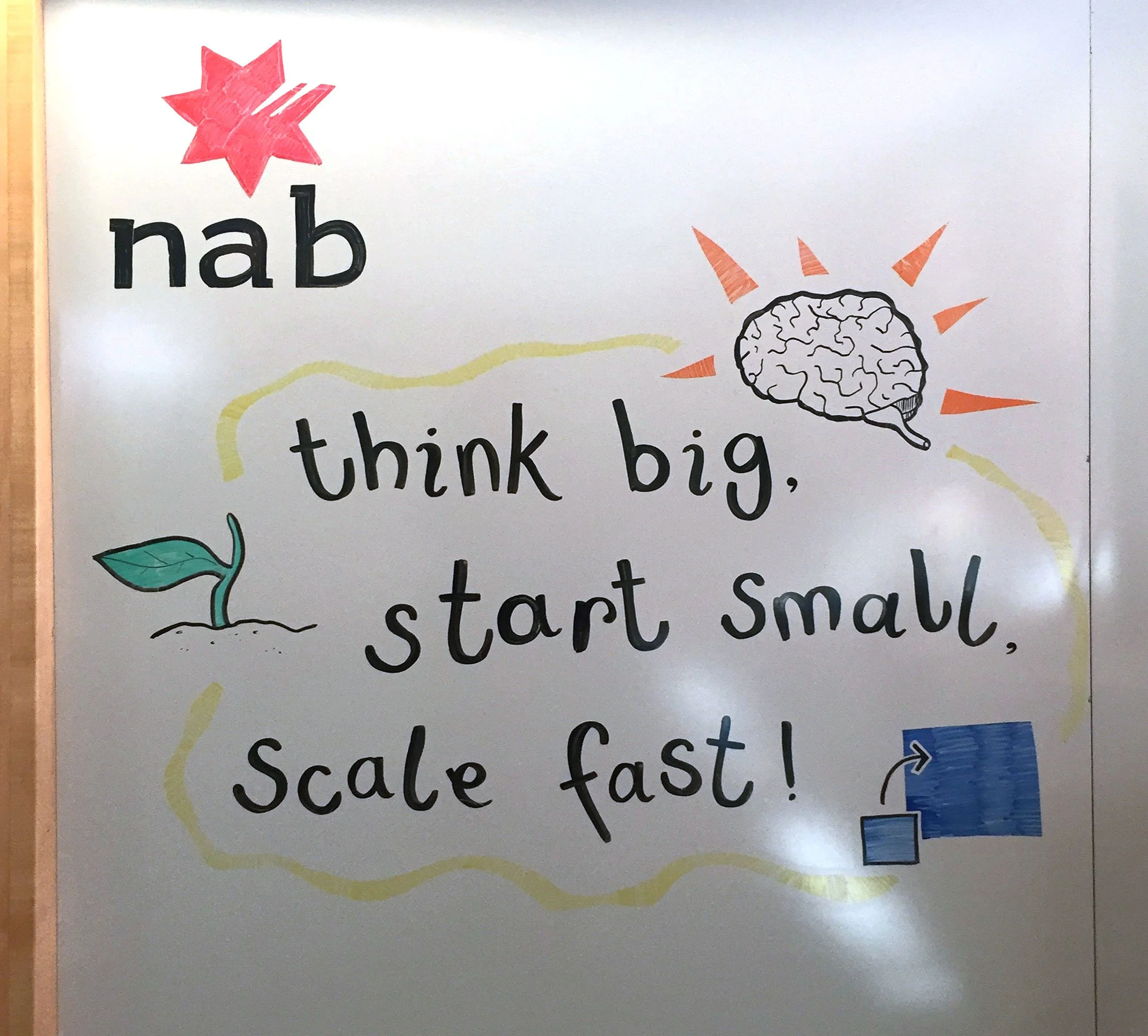
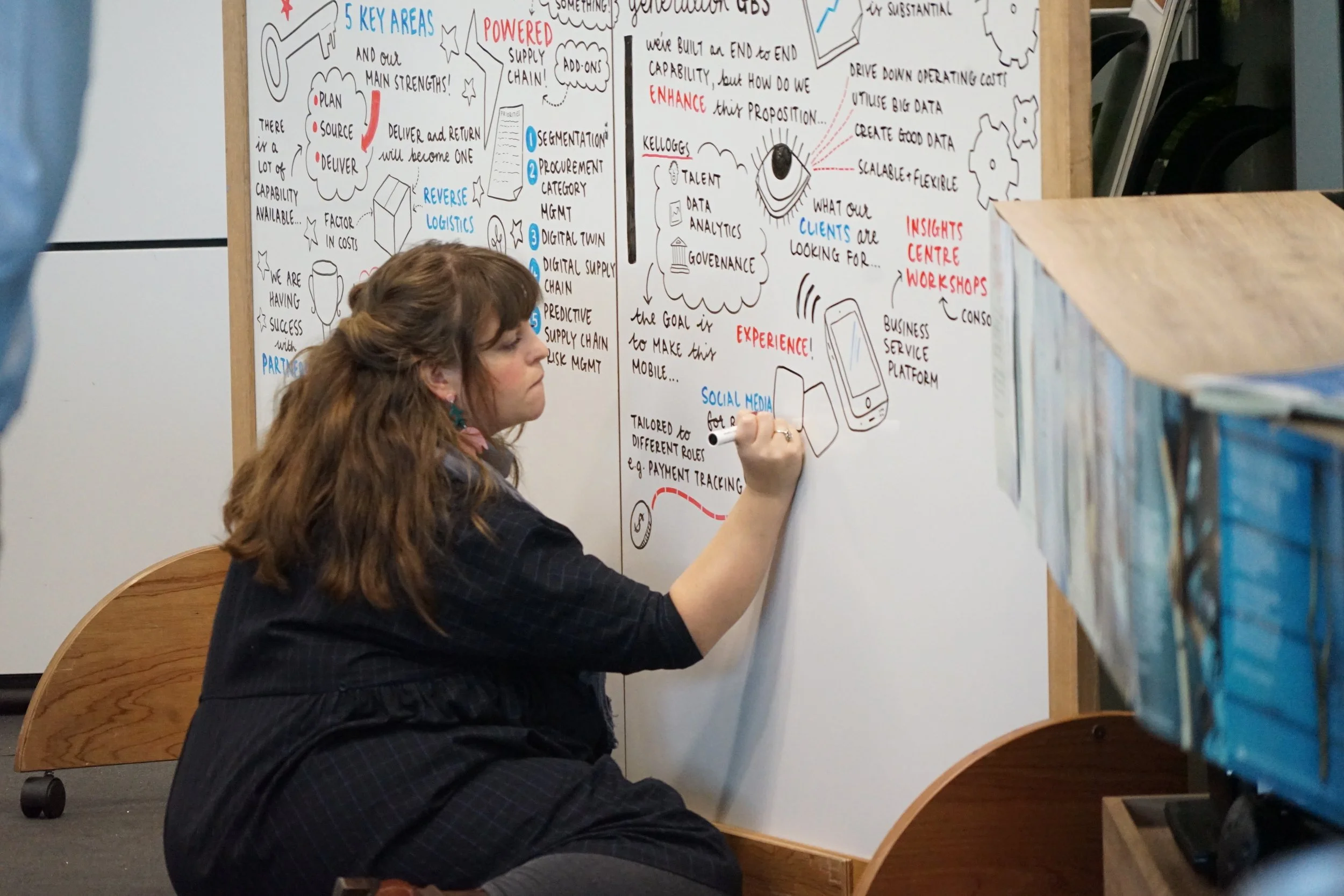
There's something almost tactile and sculptural about working on a whiteboard. Sometimes it reminds me of ceramics, the way you can use your fingers and unexpected tools to push and shape the dry-erase ink across the whitevoard surface. It has a quality all of its own.
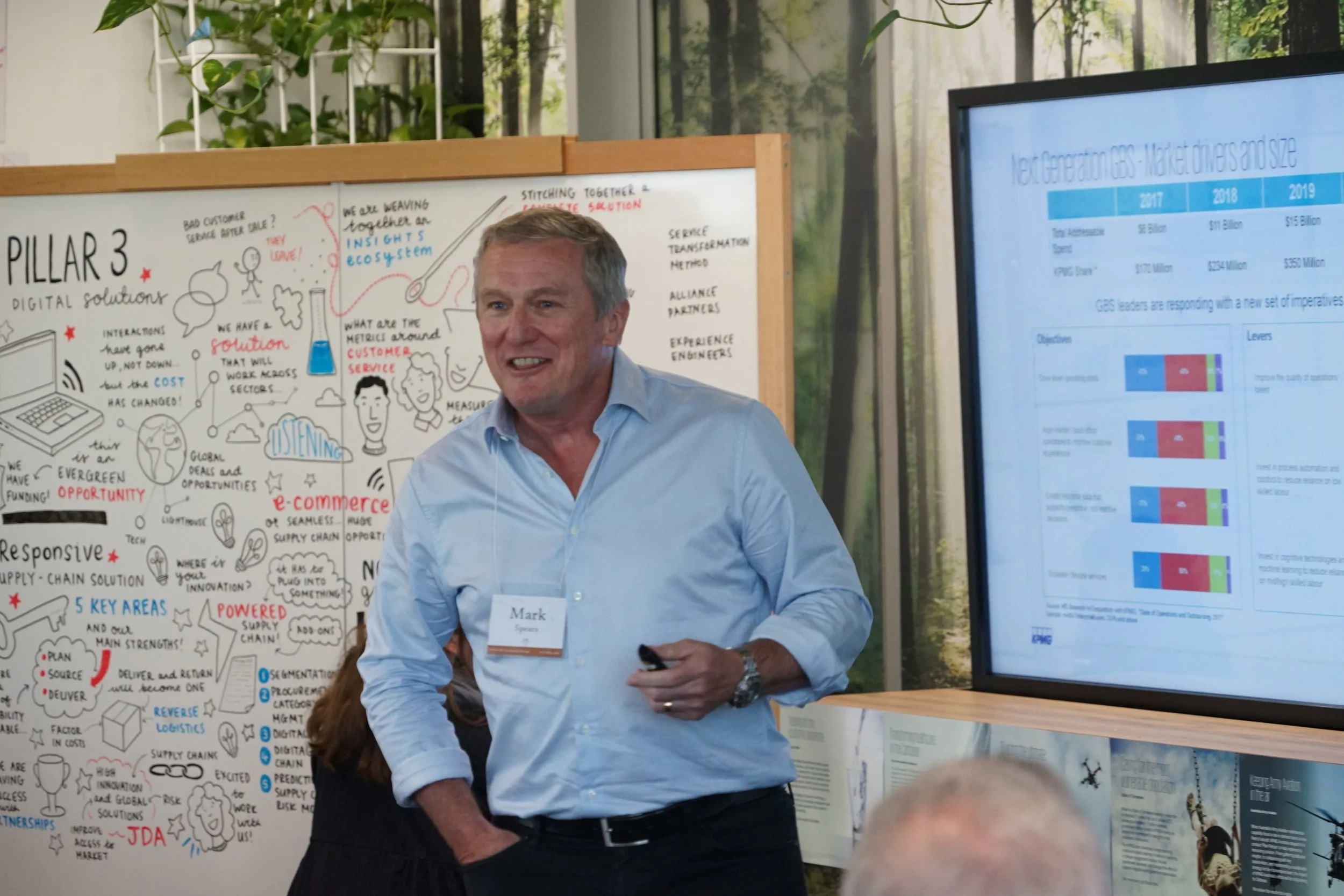
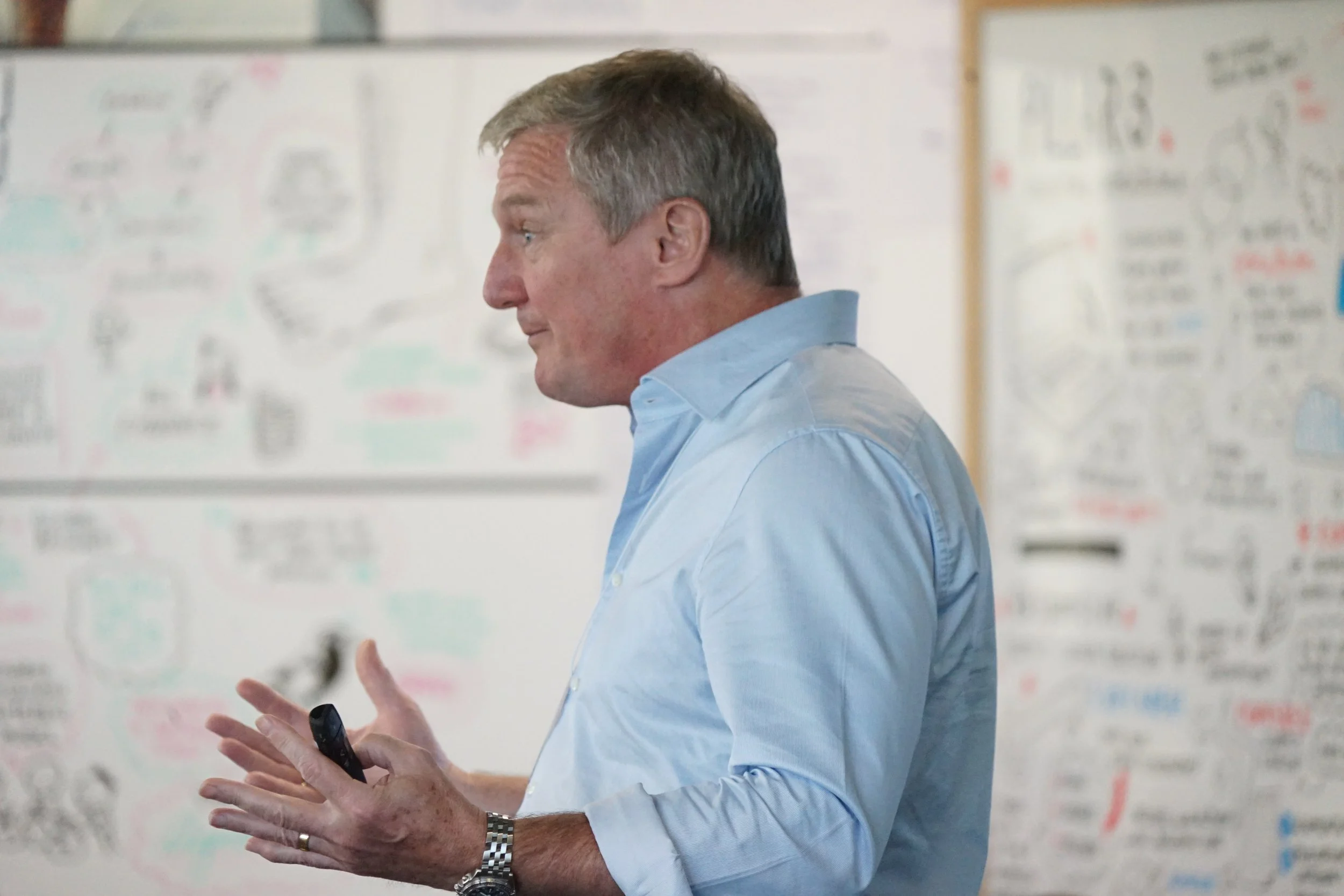
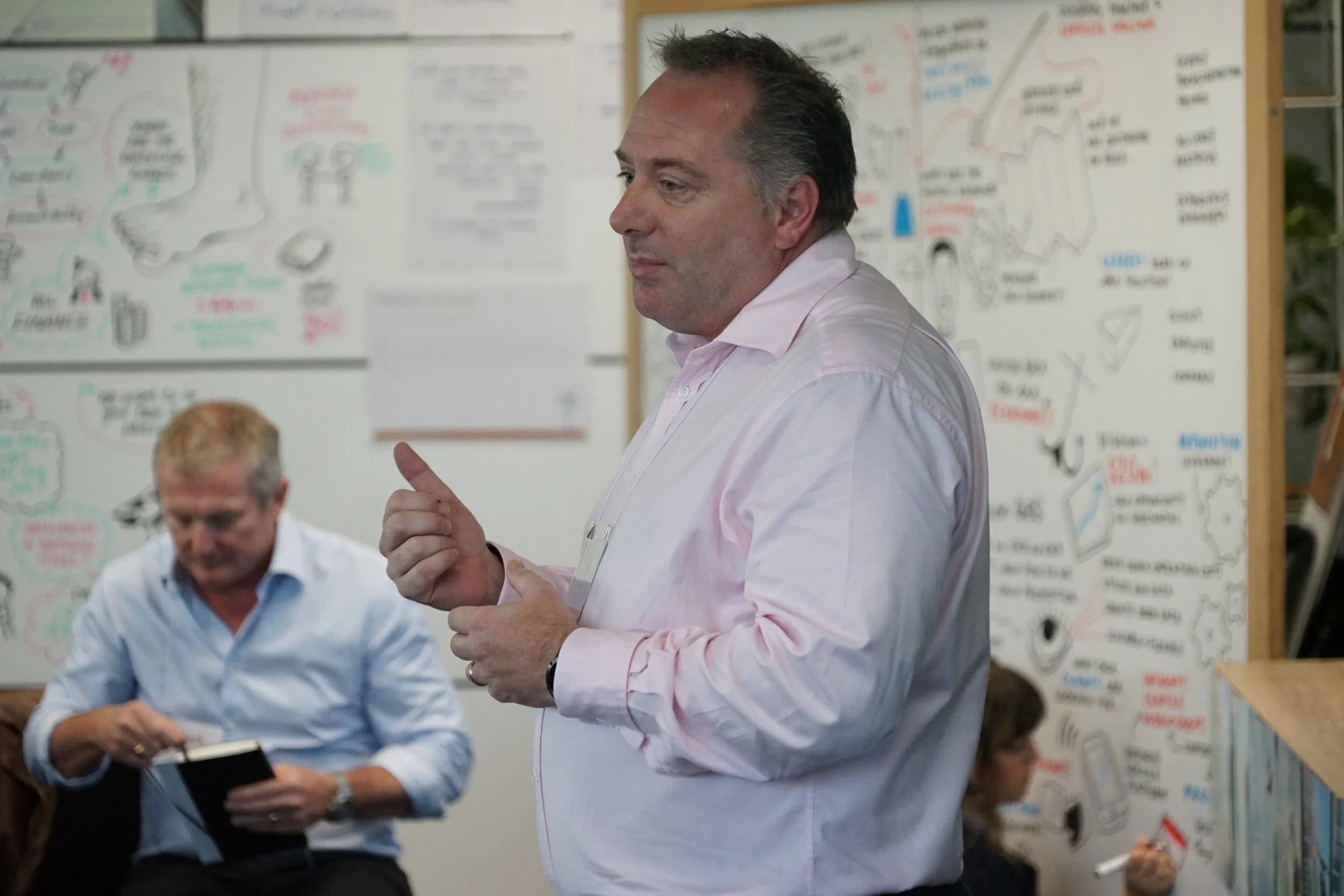
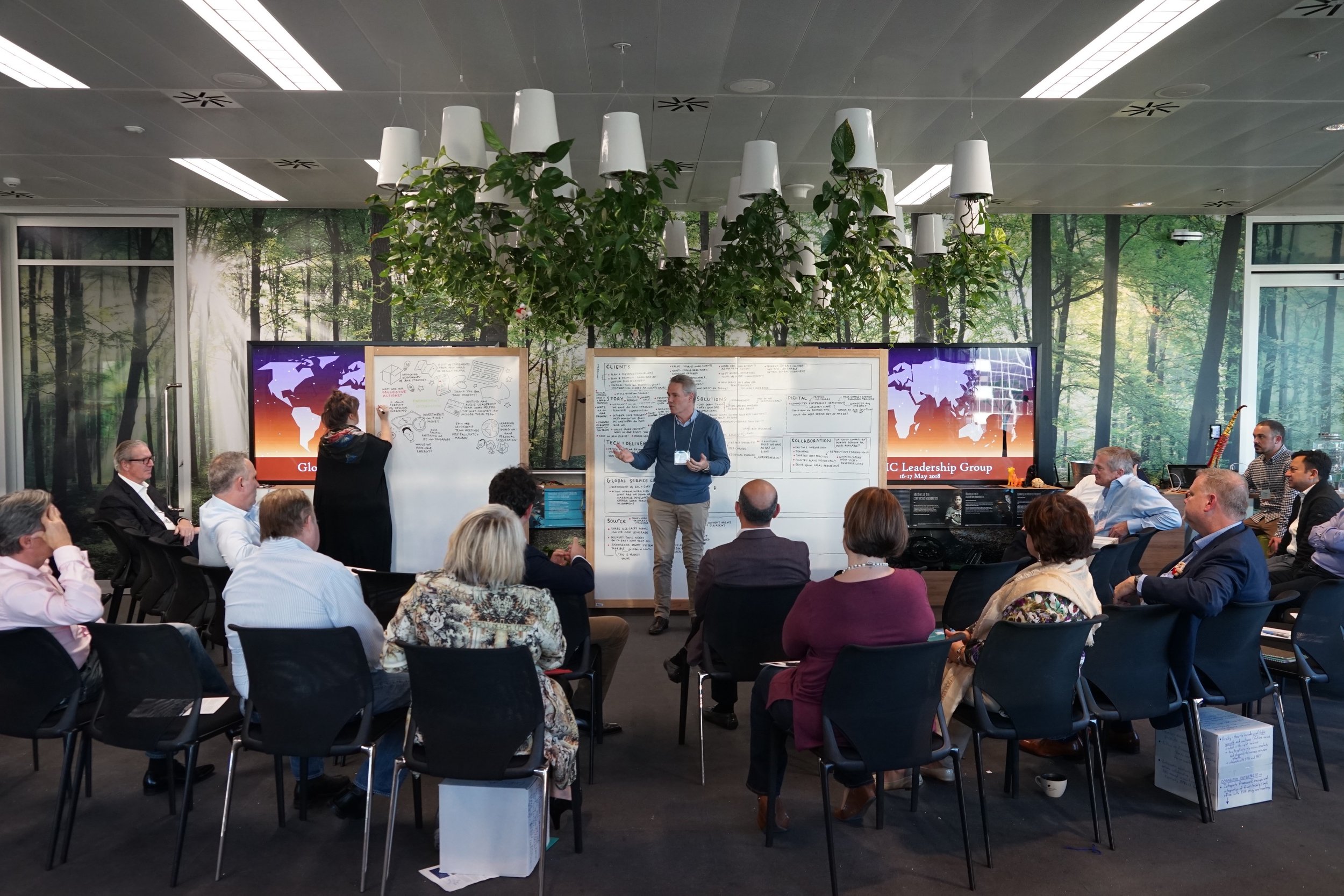
Whiteboard graphic recording works beautifully for big and small sessions where the conversation moves fast and you need to keep up in real time. It's immediate, responsive, and there's an energy to it that suits certain rooms perfectly. The one consideration is longevity — unless you have an endless supply of whiteboards to fill, this medium works best when the output doesn't need to live in the space long-term.
There is some post-production involved after the session — cleaning up light glare, colour correcting, and digitising the work so it can be shared and used, but the result is a polished, usable artefact that captures everything from the room.
-
There is nothing - nothing - more satisfying than organising and replenishing my markers before a session. Fresh ink, replacement nibs, a full spectrum of colours laid out and ready. After 20 years of curating this kit, the ritual still delights me.
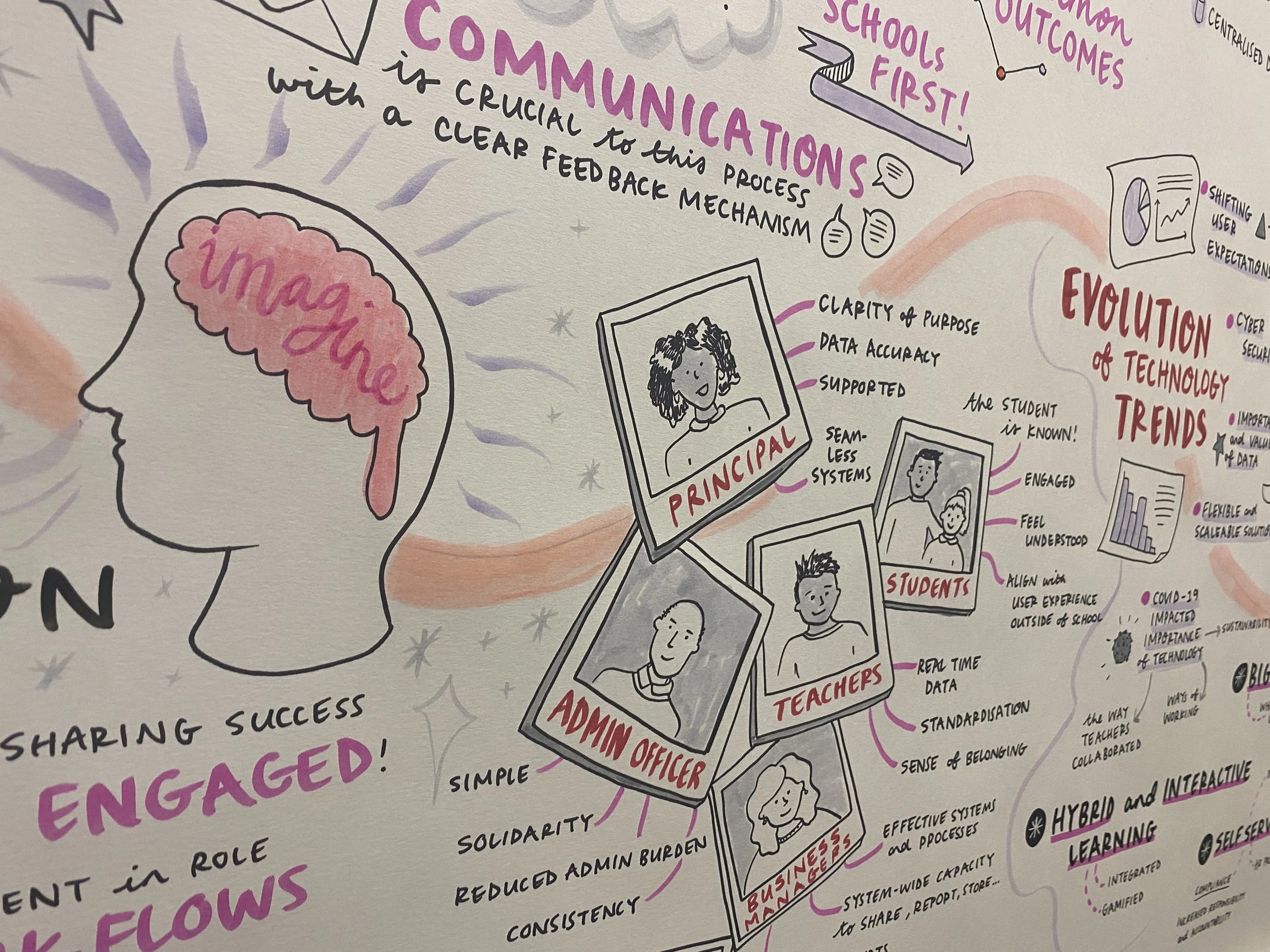
Scribing on paper. board, or canvas is the medium to choose when you want the physical artefact to genuinely last. A few of my larger strategic captures are framed in boardrooms and government offices around Australia - and there's something wonderful about work that starts as a live conversation and ends up as something people want to keep looking at.
Traditionally, graphic recorders have worked on white foamcore boards — and many still do. I stopped buying it years ago. It dries out pens quickly, gets scruffy at the edges, and frankly it's terrible for the environment. There are better options, and I'll always use them.
The beauty of this medium is the texture and richness that comes from working across materials - pens, pastels, pencils, watercolour - layered together in ways that a whiteboard or screen simply can't replicate. My kit has been evolving for two decades and can match any branding palette you hand me.
The right surface depends on what you need the work to do - how it will be displayed in the room, whether it needs to live on your wall afterwards or simply be digitised and shared. We can work through all of that together before your session to find the right option for your space, your session and your budget.
-
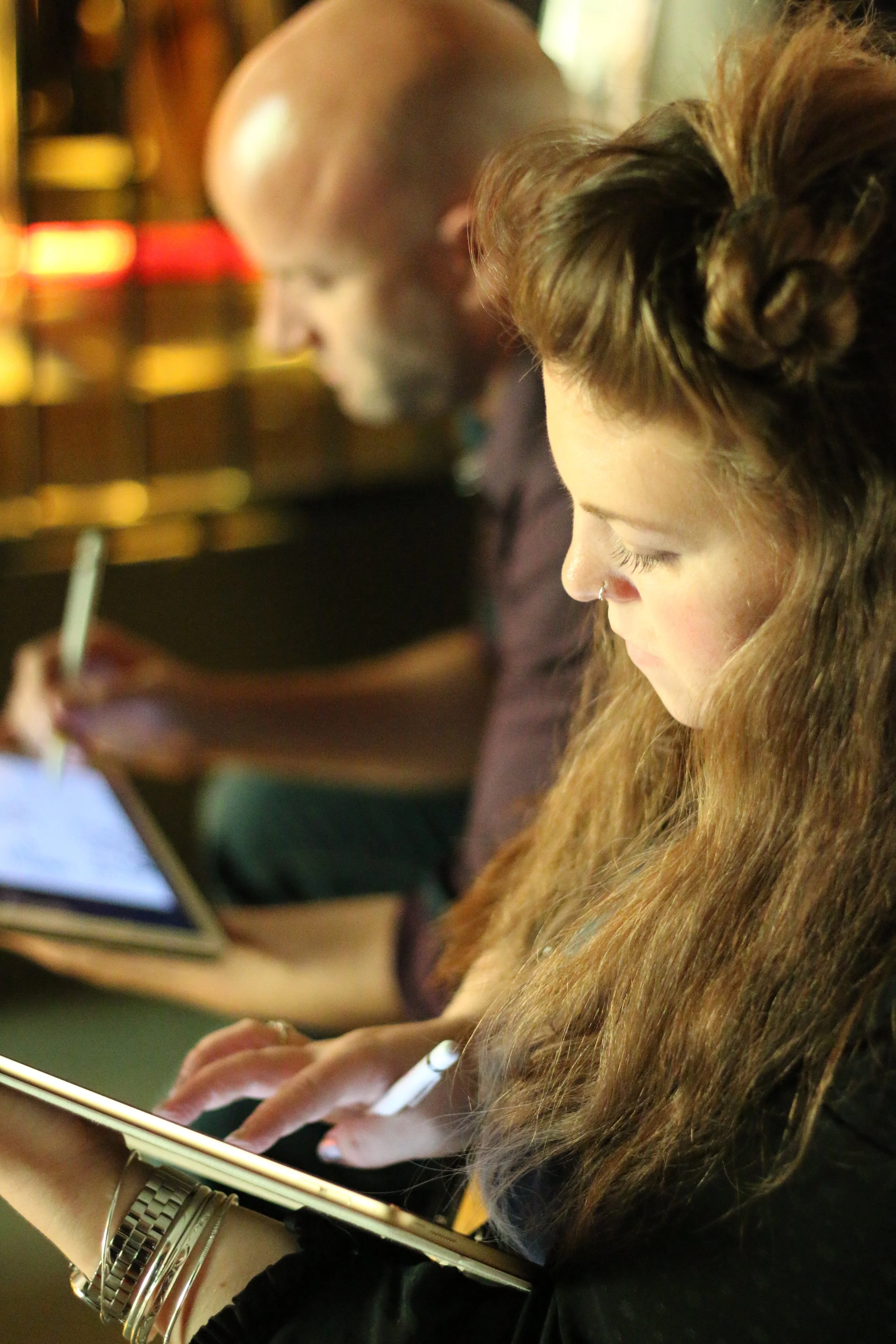
I should confess: I fell into digital scribing at approximately 9:55pm in a Covent Garden Apple Store, the night before a large multi-day event at the Tate Modern in London.
I'd been booked, completed two days of setup and prep in the huge space and then the decision was made, last minute, that I'd be scribing digitally. "Great!" I said, with complete confidence, while quietly noting that my Wacom tablet was sitting at home approximately 10,000 miles away. A very late night in a London hotel room followed, practicing with a brand new iPad and getting acquainted with the particular idiosyncrasies of the Apple Pencil.
Ten minutes into the first session the next morning, I was in absolute heaven.
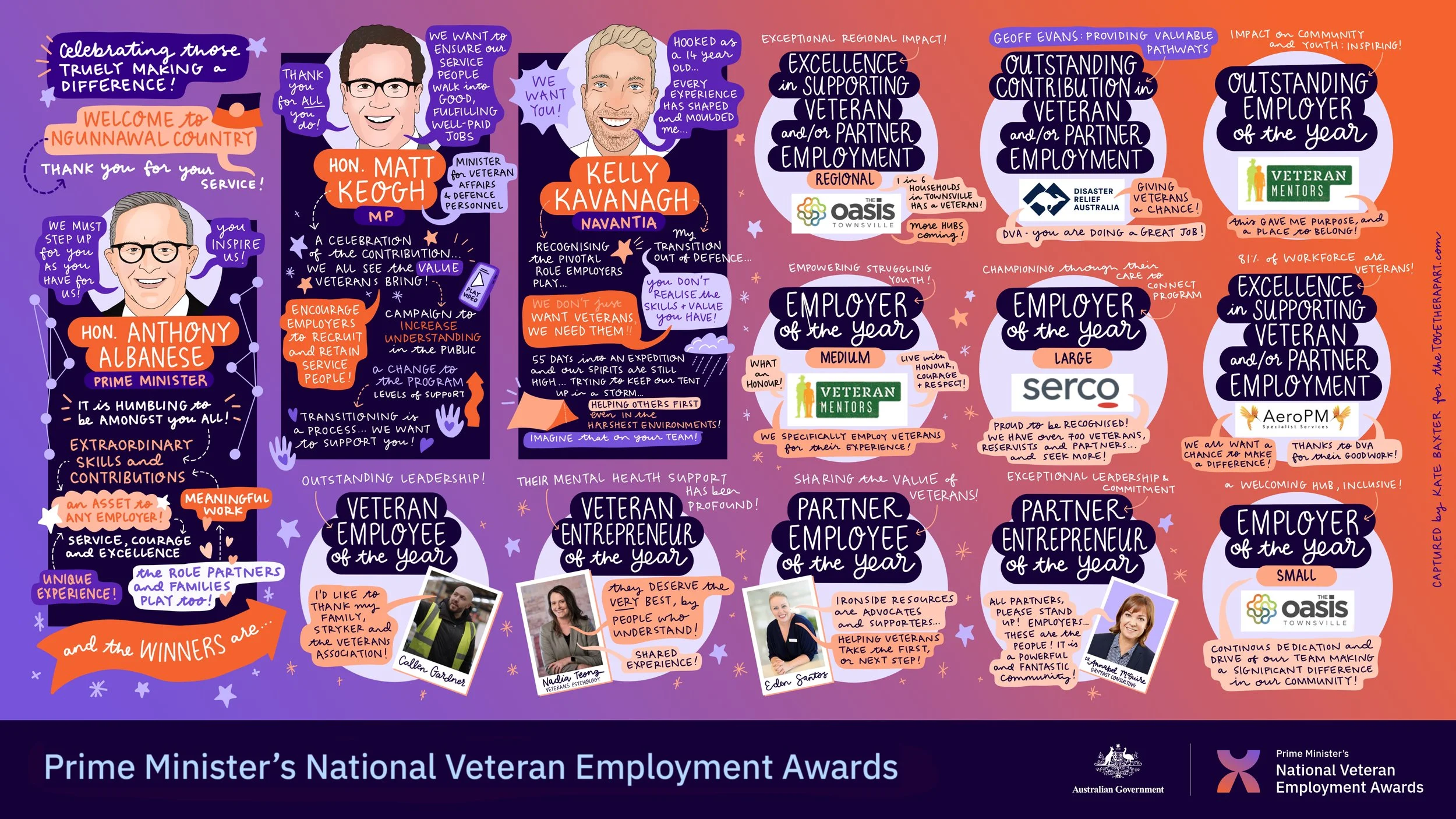
That was the beginning of a love affair that hasn't dimmed. Digital scribing — and the iPad in particular — has become a genuine specialism, and if you've seen my work you'll probably understand why.
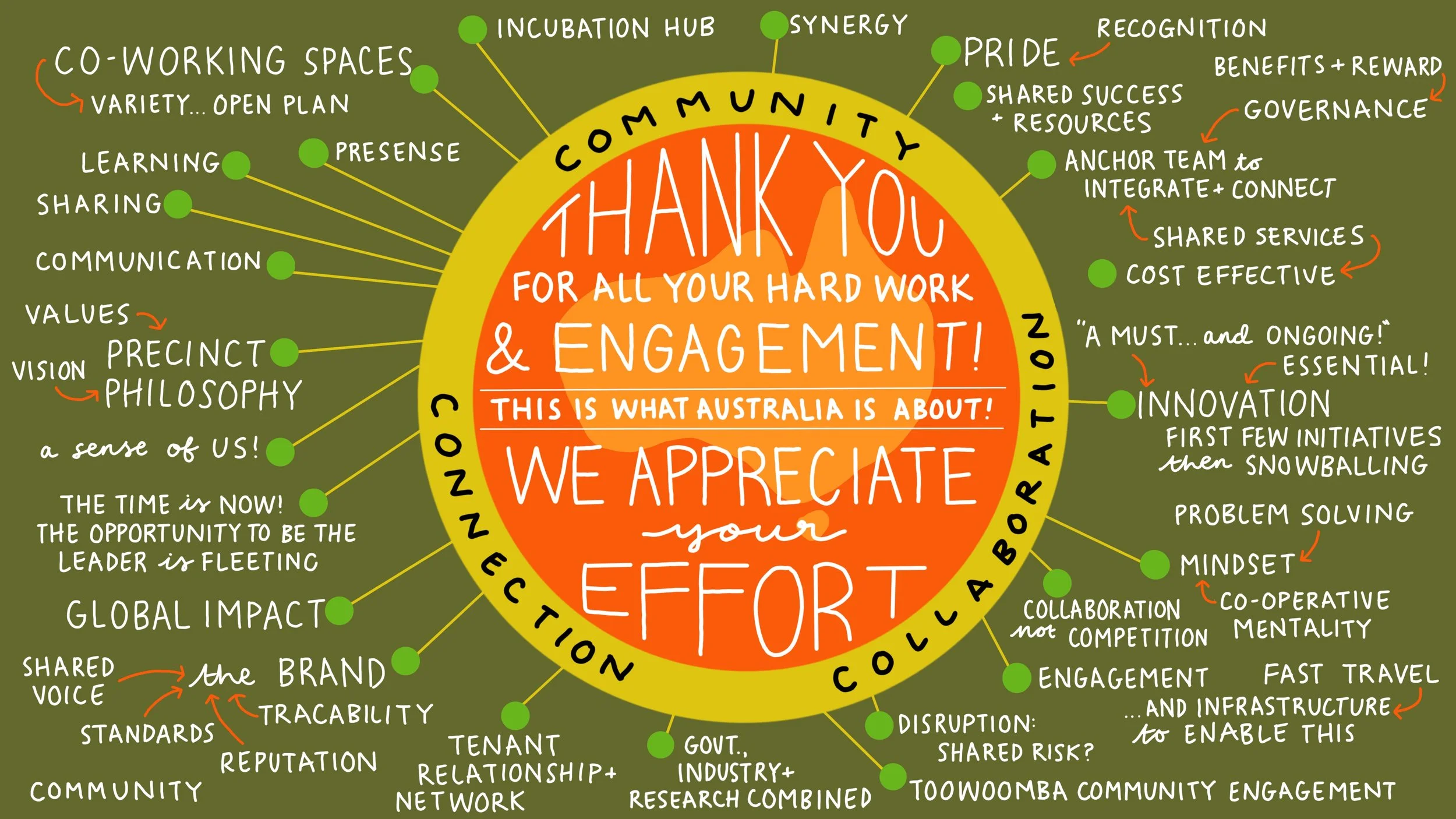
The magic is in the zoom. Being able to move across a vast canvas and zoom in for detail means my lettering stays crisp and neat and my illustrations stay sharp, even at speed. And unlike working with physical markers, every brush texture, nib width and colour exists at the touch of a button — no swapping pens, no running out of a specific shade of teal mid-session, no compromises.
The other thing I love is the immediacy of the deliverable. Full colour backgrounds, logos and images dropped directly into the work, branding matched on the fly — and the moment the conversation ends, so does the post-production. No photography, no digitising, no colour correction. C'est fini.
-
![illustrated speech bubble]()
1. SAY HELLO
We'll talk online, by phone, or in person — whatever works for you. I'll ask about your objectives, who's in the room, the type of session (keynote, panel, workshop with breakouts, open group conversations), and logistics like room setup and which medium you'd prefer. This is a great moment to start thinking about what outputs you need to best achieve your outcomes – individual scribes per speaker to share in detail, a synthesised overview one-pager for the board or social media assets to share with community members?
-
![]()
2. Let's make it official
I'll recap our briefing conversation in writing for clarity and send through a detailed quote for review, and once you're happy, we'll lock it! I'll schedule a quick check-in ahead of the event and attend any briefing meetings or tech rehearsals you need in the lead up.
Once the quote has been accepted, I’ll ask you to share the event and/or organisation branding guidelines, followed by the agenda and final speaker names when you’re ready. -
![]()
3. Prep Mode activated
Before the event, I’ll do all the preparation in advance to get my canvas ready with titles and branding as agreed so I can hit the ground running on the day. I’ll test all my materials, pack my kit with fresh nibs, juicy pens, and every adapter you can think of as backup. I have a tried and tested check-list to tick off as I pack my kit so nothing is forgotten. We’ll check-in on final outputs and deliverables to make sure nothing has changed and agree onsite logistics like arrival times and who the best contact person is on the day.
-
![]()
4. Ready to go!
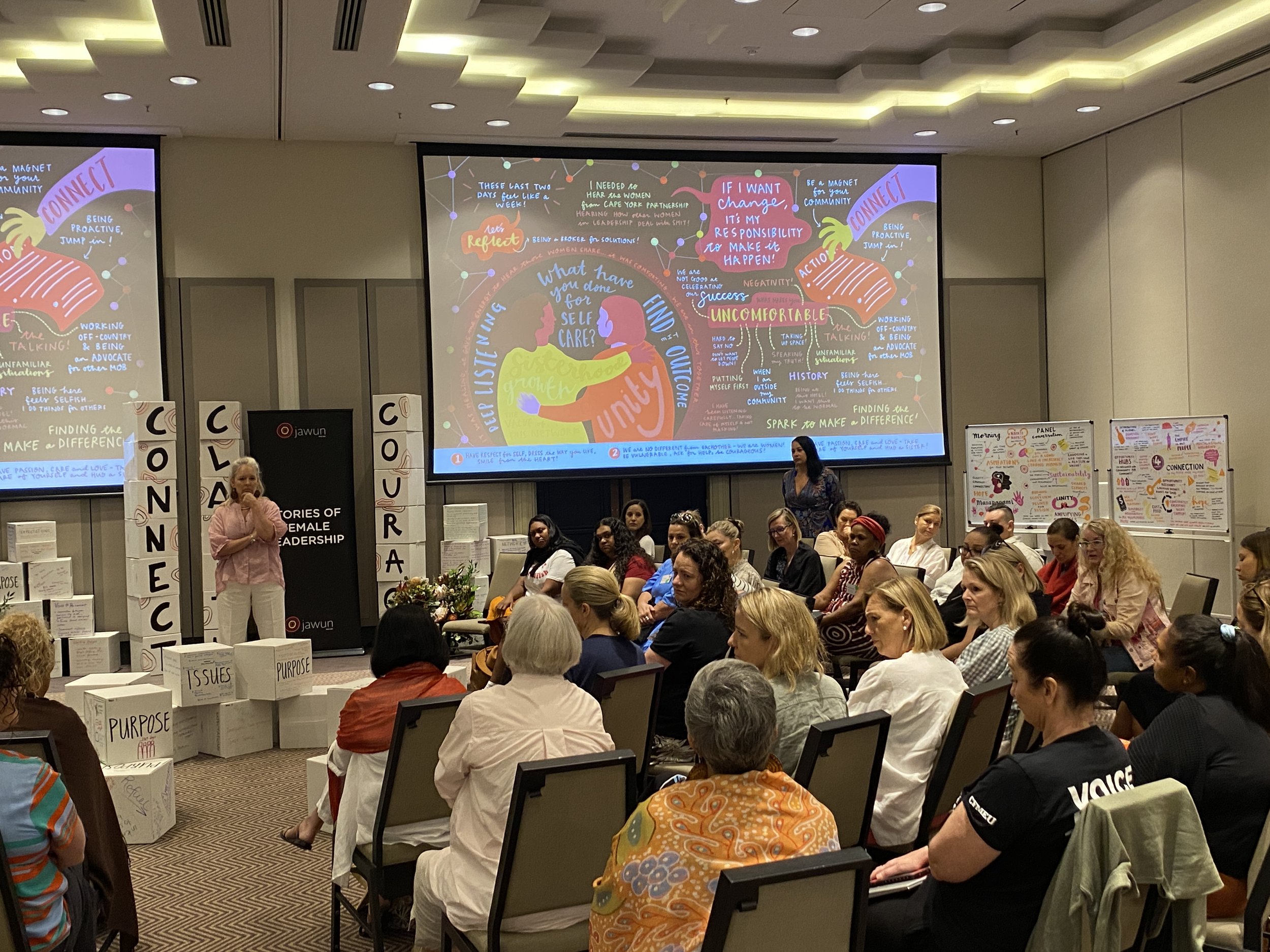
I’ll arrive at least an hour before the first session to settle into the space, meet everyone, and set up my kit. If working analogue – I’ll clean the whiteboards properly so the are a real blank canvas, or set up my easels/hang paper on the wall as per the site specifications. Otherwise, for digitally captured sessions, I’ll make friends with the AV team - or take charge of my own set-up for events without that requirement.
This is my quiet nesting time, getting my brain into listening mode and ready to begin. -
![]()
5. It's Showtime, baby!
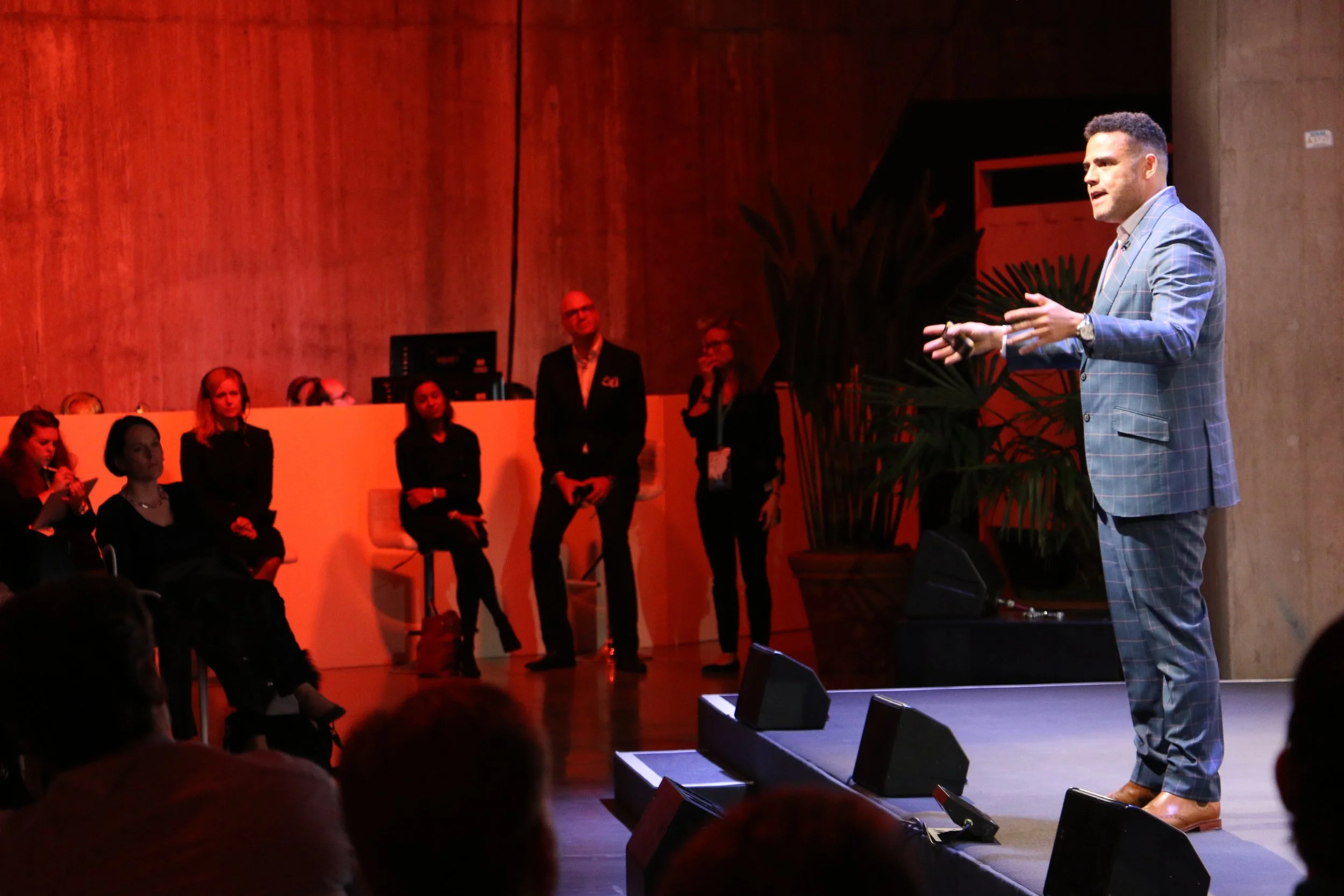
Let’s go! I’ll be laser focused on listening and capture all the conversations in real time, creating the outputs we've established. Writing, drawing and colouring as I go, it’s important to me to create outputs in the moment that look as close to the final product. So, it’s an intense practice for me – but one I’m used to and thrive in. Watch me hold 7 pens at once in my ‘spare’ hand or organise my digital layers to curate the right hierarchy of information with masks and colour blocks!
-
![]()
6. The final touches...
After catching my breath, I’ll look over the scribes carefully to look for any in the moment spelling errors or misheard abbreviations. I’ll also make small tweaks to the layout, add detail to illustration and use colour to create flow, balance and hierarchy in the work.
The files will be with you in the formats agreed prior to the session and I’ll pack up my kit ensuring the venue space is reset to how I found it. -
![]()
7. Over to you
In your hands (well… in your email or our share drive) you’ll have a copy of all the completed work. These are yours now.
I’ll check in to make sure you have all the files, and if there are any edits upon review - you have 10 working days from the event itself to make minor text edits.
I’m always around for a debrief conversation or feedback chat to talk about how the event went and if there is anything I could do next time to support you better.